Vraja-mandala parikrama: the pilgrim circuit of Krishna's land
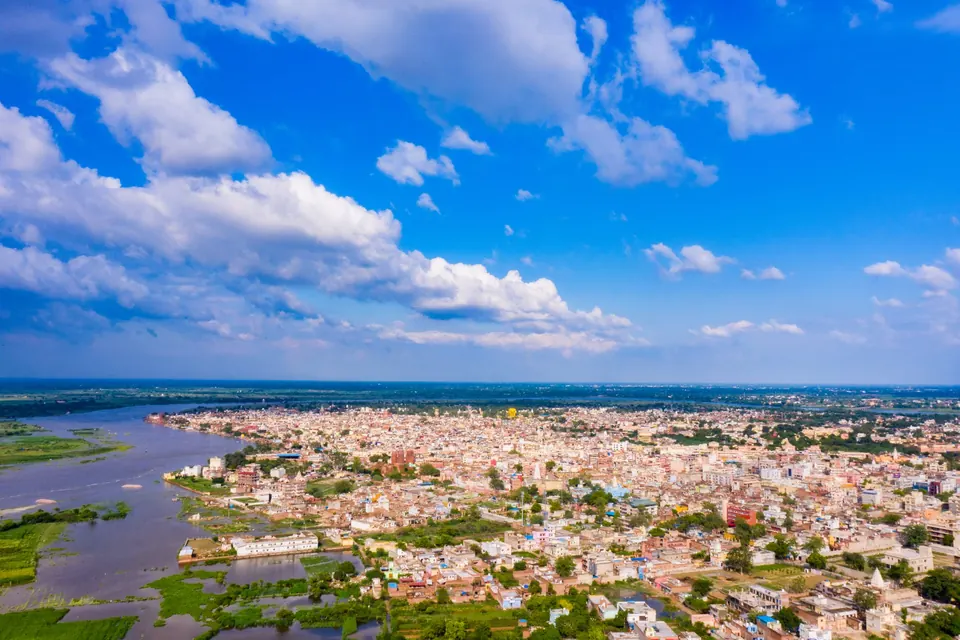
Vraja (or Braj) is the region on both banks of the Yamuna around Mathura, in Uttar Pradesh, where the Puranas place Krishna's childhood among cowherds. Walking around it, a practice called parikrama, is one of the great pilgrimages of Vaishnava India.
Older links to this address pointed to a downloadable guidebook to the circuit published by a Gaudiya institution. That book is not reproduced here; this article introduces the pilgrimage itself.
A sacred geography
The region is traditionally measured as eighty-four kos, roughly 250 to 300 kilometres of walking, and is described as a mandala containing twelve forests (vanas): Madhuvana, Talavana, Kumudavana, Bahulavana, Kamyavana, Khadiravana, Vrindavana, Bhadravana, Bhandiravana, Bilvavana, Lohavana and Mahavana. Each is linked with episodes from the tenth book of the Bhagavata Purana and later texts, and holds dozens of ponds (kundas), groves and shrines.
Key stations include:
- Mathura, Krishna's birthplace according to the tradition, with its riverside ghats.
- Gokula and Mahavana, where he is said to have been raised by Nanda and Yashoda.
- Vrindavan, the town of temples and the base of the Six Gosvamis in the sixteenth century.
- Govardhan Hill, a low ridge of rock about 21 kilometres around, which Krishna is said to have lifted to shelter the villagers from Indra's storm. Walking around it is a pilgrimage in its own right, done by many people every day.
- Radha-kunda and Shyama-kunda, twin ponds near Govardhan held especially sacred by Gaudiya Vaishnavas.
- Barsana and Nandagaon, hill villages associated with the families of Radha and Krishna, famous for their Holi celebrations.
A rediscovered landscape
Historians stress that much of this map was fixed, or re-fixed, in the sixteenth century. When Chaitanya visited Vraja in 1515, according to his biographers, many of the sites associated with Krishna were forgotten or uncertain. His followers Rupa and Sanatana, later joined by Jiva Gosvami and others, identified places, built or encouraged temples and wrote texts on their significance. Narayana Bhatta, a scholar of the same period, compiled a detailed ritual manual for the circuit. Members of the Vallabha community, who lead their own pilgrimage known as the ban-yatra ("journey of the forests"), played a parallel role.
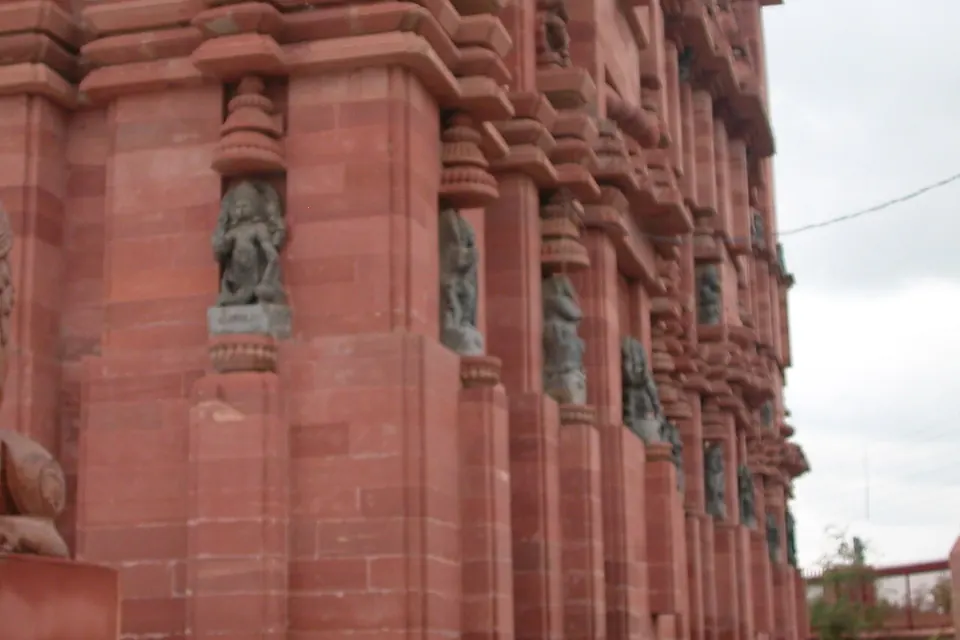
Royal patronage followed. Rajput nobles allied with the Mughal court funded large temples in Vrindavan, such as Govindadeva, completed in 1590, whose red sandstone hall still stands.
When and how it is walked
Large group parikramas are organised by temples and ashrams, usually during the rainy-season month of Bhadrapada or the autumn month of Kartika. A full circuit takes about a month, with camps moved from site to site. Pilgrims walk barefoot or in simple footwear, bathe in the kundas, sing kirtan and listen to readings at each station. Many shorter circuits exist: around Vrindavan town, around Govardhan, or around a single forest.
Several guidebooks describe the route and the stories attached to each place. Gaudiya institutions have published their own, and researchers such as David Haberman and Alan Entwistle have documented the pilgrimage in detail.
Changes and pressures
Vraja is no longer the rural landscape of the texts. Mathura and Vrindavan have grown fast, with new temples, hotels and roads, while the Yamuna suffers from serious pollution and reduced flow. Quarrying in the hills of the region and encroachment on ponds have prompted court cases and campaigns by local and devotional groups. Studies of the region describe a pilgrimage that is thriving in numbers while its natural setting comes under strain.
Stories attached to the land
What makes the circuit meaningful to pilgrims is the density of stories. At Kaliya Ghat in Vrindavan, Krishna is said to have subdued the serpent Kaliya who poisoned the Yamuna. At Brahma-kunda, the creator Brahma is said to have hidden the cowherd boys and calves to test Krishna. At Kusuma Sarovara, near Govardhan, the gopis gathered flowers; at Uddhava-kunda, Krishna's friend Uddhava brought them a message from Mathura. In Barsana, the hill of Radha's family, temples crown the ridge, and at Nandagaon, on the opposite hill, the house of Nanda is shown. Each station has its own legend, ritual and local custodians, and guidebooks list hundreds of such places.
For Gaudiya Vaishnavas the circuit is also a journey through the works of the Gosvamis, who wrote about these places and lived at several of them. Rupa and Sanatana stayed at sites now marked by temples; Raghunatha Dasa spent decades at Radha-kunda; Jiva Gosvami lived at Radha-Damodara. Our article on the Six Gosvamis describes their role in identifying the sacred sites.
Practices on the road
Pilgrims on the full circuit follow a daily routine set by the organisers. Days begin before dawn with chanting, followed by walking to the next camp, often twenty kilometres or more, with stops at temples and ponds where a teacher tells the story of the place. Bathing in the kundas, offering lamps and circumambulating hills and trees are common acts of worship. Some pilgrims perform the Govardhan circuit by prostrating themselves along the whole route, a practice called dandavat parikrama that can take weeks.
The walk is also a social event. Groups from Bengal, Gujarat, Rajasthan and abroad camp side by side, and village communities along the route supply food, water and services. Anthropologists have noted how the pilgrimage sustains a regional economy and a network of relationships between pilgrims and local residents.
Seasons and festivals
Kartika, the autumn month in which Krishna is said to have been bound by his mother as Damodara, is considered the most auspicious time for a stay in Vraja; many Gaudiya institutions hold their parikramas then, and evening lamp offerings are sung with the Damodarashtaka. The rainy-season month of Bhadrapada includes Krishna's birth festival, Janmashtami, and Radhashtami, Radha's appearance day, celebrated at Barsana. Holi, in spring, draws large crowds to Barsana and Nandagaon for the famous "stick Holi".
Sources and further reading
- David L. Haberman, Journey Through the Twelve Forests: An Encounter with Krishna, Oxford University Press, 1994.
- Alan W. Entwistle, Braj: Centre of Krishna Pilgrimage, Egbert Forsten, 1987.
- David L. Haberman, River of Love in an Age of Pollution: The Yamuna River of Northern India, University of California Press, 2006.
- Wikipedia, "Braj" (orientation): en.wikipedia.org.