Jiva Gosvami: the systematic theologian of Vrindavan
Jiva Gosvami was the youngest of the Six Gosvamis of Vrindavan and the most prolific scholar of the group. Where his uncle Rupa wrote the aesthetics of devotion, Jiva built its philosophy, setting Gaudiya Vaishnavism on the same intellectual footing as the established schools of Vedanta.
Life
Jiva was born around 1513 in Bengal, the son of Vallabha (also called Anupama), younger brother of Rupa and Sanatana, the two ministers of the sultan of Gauda who had renounced their posts to follow Chaitanya. Traditional accounts say that as a boy Jiva met Chaitanya only in a dream or fleetingly, and that he studied Sanskrit grammar and philosophy in Navadvipa and then in Varanasi, under the scholar Madhusudana Vachaspati.
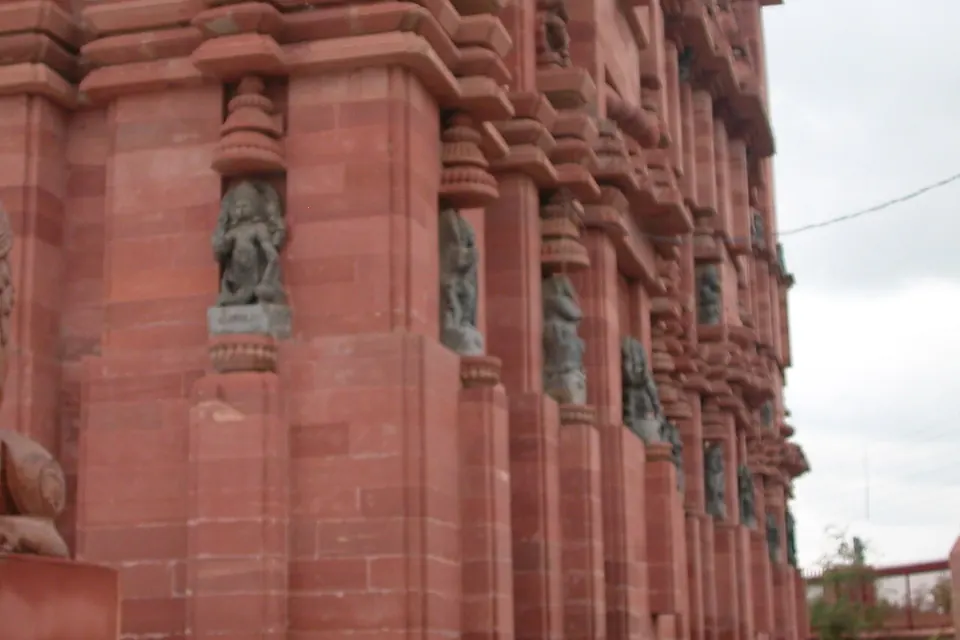
He went to Vrindavan as a young man and lived there under the guidance of Rupa for the rest of his life. He founded the Radha-Damodara temple in 1542, and after the deaths of Rupa and Sanatana became the recognised senior authority of the Vrindavan community. He died around 1598; his tomb is in the Radha-Damodara compound.
The Sat-sandarbha
Jiva's major work is the Bhagavata-sandarbha, better known as the Sat-sandarbha or "six treatises". It sets out a full theology based on the Bhagavata Purana, which Jiva treats as the natural commentary on the Vedanta-sutra and the highest scriptural authority:
- Tattva-sandarbha: on sources of knowledge and the authority of scripture.
- Bhagavat-sandarbha: on God as the supreme person, beyond the impersonal Brahman.
- Paramatma-sandarbha: on God as the indwelling self and on the relation between God, souls and the world.
- Krishna-sandarbha: on Krishna as the source of all divine forms.
- Bhakti-sandarbha: on devotion as the means.
- Priti-sandarbha: on divine love as the goal.
Here Jiva formulated the doctrine later called achintya-bhedabheda, "inconceivable difference and non-difference": souls and the world are both one with God and distinct from God, in a way that reason cannot fully grasp. This position became the Gaudiya school's signature in philosophical debate.
Other works
Jiva wrote in many genres. His Hari-namamrita-vyakarana is a Sanskrit grammar in which technical terms are replaced by names of Krishna, so that studying grammar becomes an act of remembrance. The Gopala-champu, in mixed prose and verse, narrates Krishna's life in Vraja. He also wrote commentaries on Rupa's Bhakti-rasamrita-sindhu and Ujjvala-nilamani, on the Brahma-samhita and on the tenth book of the Bhagavata.
The books go to Bengal
Late in his life Jiva entrusted a cart-load of Gosvami manuscripts to three younger scholars, Shrinivasa Acharya, Narottama Dasa and Shyamananda, to take to Bengal and Orissa. According to the later biographies, the books were stolen on the way at Vishnupur by men of the local king, Vira Hambira, who on discovering what they were became a disciple of Shrinivasa. Whatever its legendary elements, the episode marks the transmission of Vrindavan theology to the eastern communities, and the start of the festivals at Kheturi where Narottama's followers formalised Gaudiya practice.
Jiva and the Vrindavan community
After the deaths of Rupa and Sanatana, Jiva became the arbiter of doctrinal and practical questions for the Gaudiya Vaishnavas of Vrindavan. Letters attributed to him address disputes about the identity of Radha and Krishna's companions and about how the theology of Vrindavan should be taught in Bengal. He worked with Krishnadasa Kaviraja, whose Chaitanya-charitamrita, completed in Vrindavan in the late sixteenth or early seventeenth century, cites Jiva's works and reflects his synthesis. Through these channels Jiva shaped the version of Gaudiya theology that later generations received as orthodox.
He also dealt with the outside world. The period saw growing Mughal and Rajput interest in Vrindavan, with the patronage that produced the great sandstone temples of the late sixteenth century. Tradition holds that Jiva met the emperor Akbar, although historians note that the evidence for this is late. What is clear is that the Vrindavan Gosvamis benefited from imperial land grants, documented in Mughal records studied by historians such as Irfan Habib and Tarapada Mukherjee.
A balanced theologian
Scholars such as Ravi Gupta describe Jiva as a theologian who held together reason and revelation, systematic philosophy and intense devotion. He used the methods of Sanskrit scholasticism, debating Advaita Vedanta, Nyaya logic and Mimamsa ritual theory, but placed them at the service of a devotional reading of the Bhagavata Purana. His idea that God's energies are both identical with and distinct from him allowed Gaudiya Vaishnavas to affirm the reality of the world and of individual souls without separating them from God.
His influence reached well beyond his own community. Later Vaishnava thinkers in Bengal and Vrindavan, including Vishvanatha Chakravarti and Baladeva Vidyabhushana in the eighteenth century, built on his works, and twentieth-century missions translated parts of the Sat-sandarbha into Bengali, Hindi and English. Critical editions and translations by academic scholars have appeared only in recent decades.
Jiva's place among the Six Gosvamis
Jiva was the youngest of the six scholars whom the tradition groups as the Gosvamis of Vrindavan, alongside his uncles Rupa and Sanatana, Gopala Bhatta, Raghunatha Bhatta and Raghunatha Dasa. Each had a recognised speciality: Sanatana's ritual and Bhagavata commentary, Rupa's aesthetics, Raghunatha Dasa's poetry of renunciation. Jiva's was systematic philosophy. Our article on the Six Gosvamis describes how their work fitted together.
Further reading on this site
Jiva's teacher and uncle Rupa is presented in our article on the Bhakti-rasamrita-sindhu; the commentary he wrote on the Brahma-samhita is discussed there; and the landscape in which he lived is described in our article on the Vraja pilgrimage.
Sources and further reading
- Ravi M. Gupta, The Caitanya Vaisnava Vedanta of Jiva Gosvami: When Knowledge Meets Devotion, Routledge, 2007.
- S.K. De, Early History of the Vaishnava Faith and Movement in Bengal, 2nd ed., Firma K.L. Mukhopadhyay, 1961.
- Stuart Elkman, Jiva Gosvamin's Tattvasandarbha: A Study on the Philosophical and Sectarian Development of the Gaudiya Vaisnava Movement, Motilal Banarsidass, 1986.
- Wikipedia, "Jiva Goswami" (orientation): en.wikipedia.org.