Modern era
Twentieth- and twenty-first-century history: institutional splits, the movement's encounters with Western musicians, and disputes over land and religious freedom.
This section follows the Gaudiya Vaishnava tradition through the twentieth and twenty-first centuries, when a devotional movement rooted in sixteenth-century Bengal became an institution with branches on every continent. It covers three kinds of story: how the institutions were built and divided, how the tradition met Western culture, and how its communities have dealt with states, courts and public opinion.
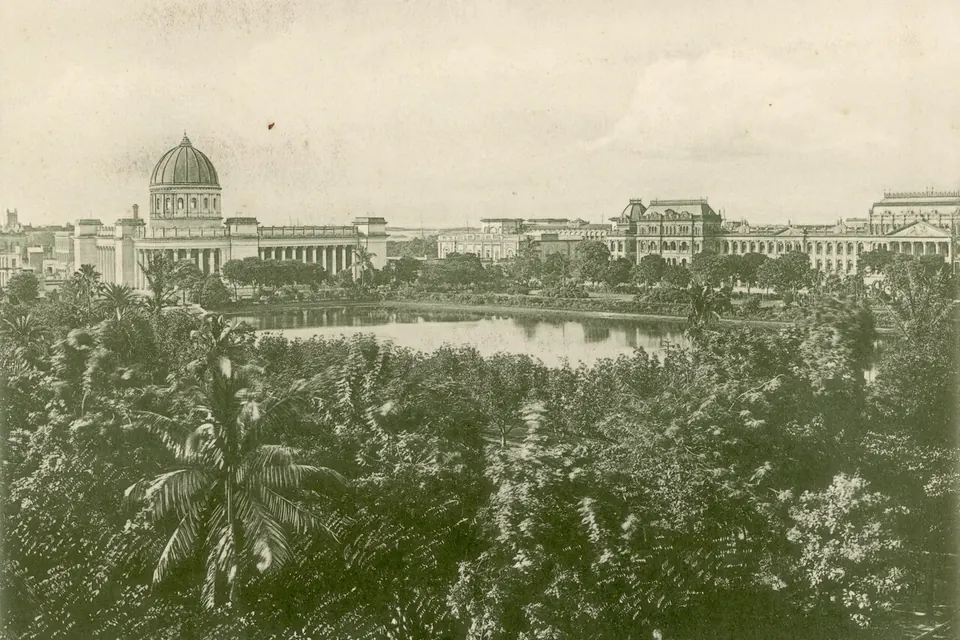
The starting point is the Gaudiya Math, founded in Calcutta by Bhaktisiddhanta Sarasvati. After his death in 1937 the mission split into rival branches, a history we trace in After 1937: the breakup of the Gaudiya Math; several of those branches, and the teachers who led them, have their own profiles in the People section. From one of the successor lines came A.C. Bhaktivedanta Swami, who sailed to New York in 1965 and founded the International Society for Krishna Consciousness the following year.
The encounter with the West is the second thread. George Harrison and the Hare Krishna movement tells how a Beatle produced records with the London temple and helped it find a home, and our data study Hare Krishna, kirtan and the Bhagavad-gita in English books measures, with Google Books figures from 1800 to 2022, when the tradition's vocabulary entered English print.
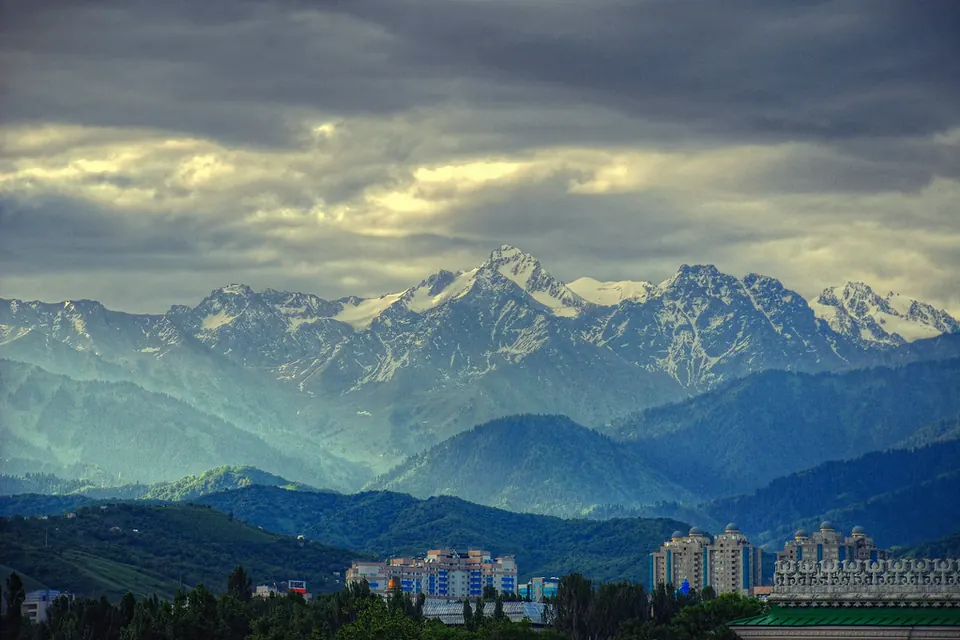
The third thread is conflict and religious freedom. Kazakhstan and the Hare Krishna farm near Almaty follows a dispute over land and demolitions between 2006 and 2008, taken up by human rights organisations and international religious-freedom reports.
We write these pages from published sources and keep a neutral tone on questions the communities themselves dispute. For readers who want to go further, three academic books are good entry points: E. Burke Rochford's Hare Krishna Transformed (New York University Press, 2007), the collective volume edited by Graham Dwyer and Richard J. Cole, The Hare Krishna Movement: Forty Years of Chant and Change (I.B. Tauris, 2007), and Ferdinando Sardella's study of Bhaktisiddhanta Sarasvati, Modern Hindu Personalism (Oxford University Press, 2013).
- After 1937: the breakup of the Gaudiya Math
When Bhaktisiddhanta Sarasvati died in 1937, the Gaudiya Math split over leadership and property. How the dispute unfolded, the lawsuits and settlement, and the many independent missions that came out of it, including ISKCON.
- George Harrison and the Hare Krishna movement
The Beatles guitarist George Harrison (1943–2001) produced the Hare Krishna Mantra single in 1969, helped fund early publications and gave a manor house near London to the movement. A sourced account of his involvement and of what is publicly known about his last days.
- Hare Krishna, kirtan and the Bhagavad-gita in English books: two centuries of Google Books data
How often do English-language books mention the Bhagavad-gita, Hare Krishna, kirtan or Vrindavan? We charted eleven terms in the Google Books Ngram data from 1800 to 2022, with a downloadable CSV, a chart and the method's limits.
- Kazakhstan and the Hare Krishna farm near Almaty, 2006–2008
Between 2006 and 2008 the authorities of the Almaty region demolished homes at a Hare Krishna farming community and contested its land rights in court. What happened, according to Forum 18, RFE/RL and international religious freedom reports.