Ratha-yatra: the chariot festival of Jagannath
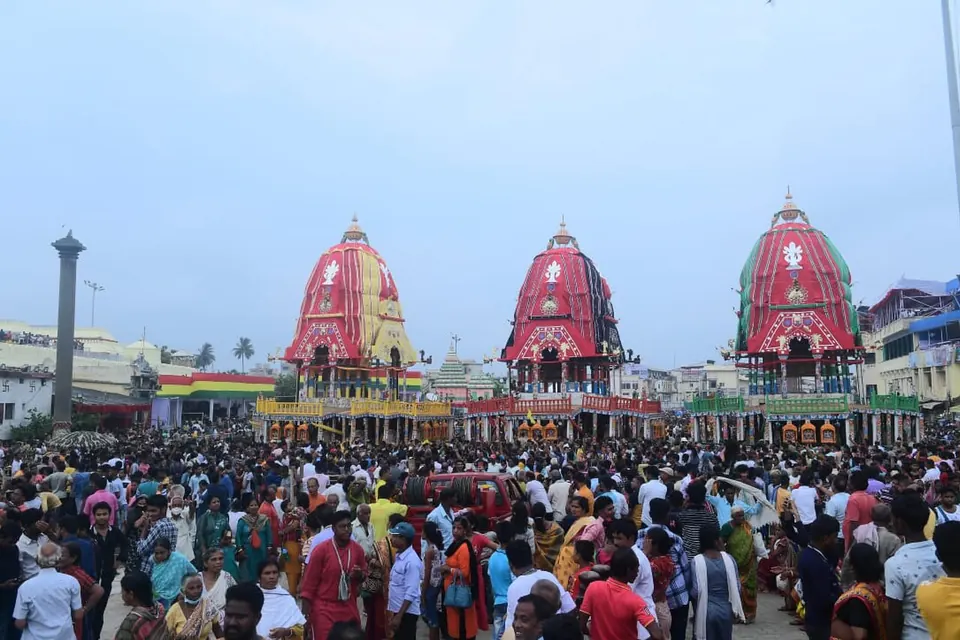
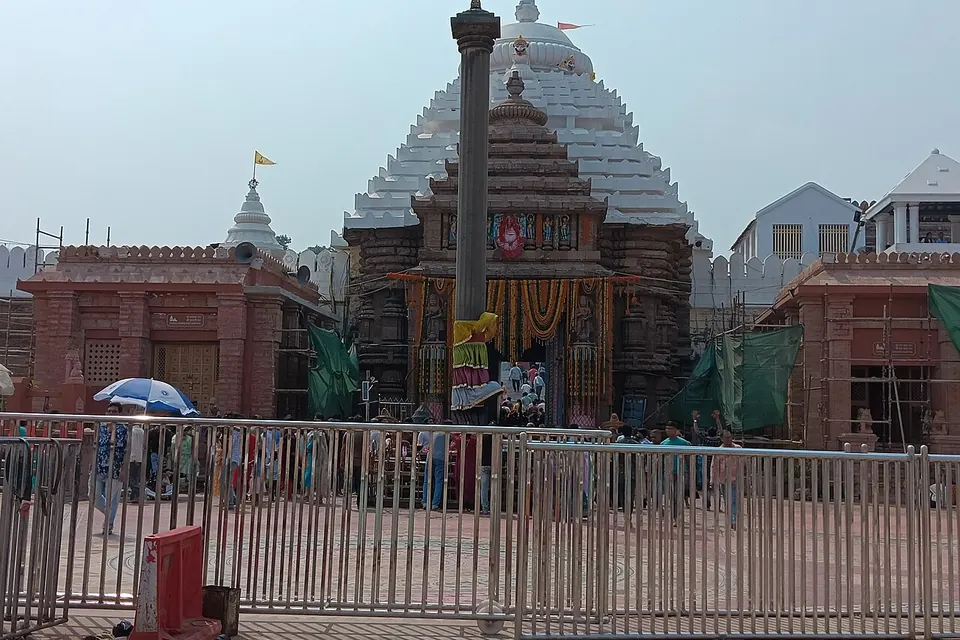
Once a year, in the month of Ashadha (June or July, see our calendar of lunar fast days for how these dates are reckoned), the deities of the Jagannath temple in Puri leave their sanctuary and are pulled through the streets on three giant wooden chariots. The Ratha-yatra is among the oldest and largest religious processions in India.
New chariots every year
Unlike processional cars kept from year to year in many South Indian temples, the Puri chariots are built anew for each festival. Work begins on Akshaya Tritiya, in spring, when hereditary carpenters start shaping timber supplied from the forests of Odisha. Each chariot has its own name, colours and dimensions:
| Deity | Chariot | Wheels | Canopy colours |
|---|---|---|---|
| Jagannath | Nandighosha | 16 | red and yellow |
| Balabhadra | Taladhvaja | 14 | red and green |
| Subhadra | Darpadalana | 12 | red and black |
The tallest, Jagannath's, stands roughly 13 to 14 metres high. After the festival the chariots are dismantled; some of the wood is used as fuel in the temple kitchen.
The sequence of the festival
The preparations start a fortnight earlier with the Snana-yatra, when the images are bathed in public with 108 pots of water. The deities are then said to fall ill and are kept away from view, receiving herbal treatment from a hereditary group of servitors. Their reappearance, the Nava-yauvana darshan, comes the day before the procession.
On the second day of the bright fortnight of Ashadha, the images are carried out of the temple in a rocking, ceremonial gait called pahandi and placed on their chariots. The former king of Puri, the Gajapati, then sweeps each chariot's platform with a gold-handled broom, a rite called chhera pahanra that expresses the king's status as the deity's first servant. Thousands of people pull the thick ropes, and the chariots move slowly along the Grand Road to the Gundicha temple, about three kilometres away, sometimes taking more than a day to arrive.
The deities stay at Gundicha for about a week before the return journey, the Bahuda-yatra. On the way back the chariots stop at a temple of the goddess Mausi Ma, where the deities are offered a sweet rice cake, and, once back at the main temple, the images appear for a day in gold ornaments (Suna Besha) before re-entering the sanctuary.
Meanings given to the festival
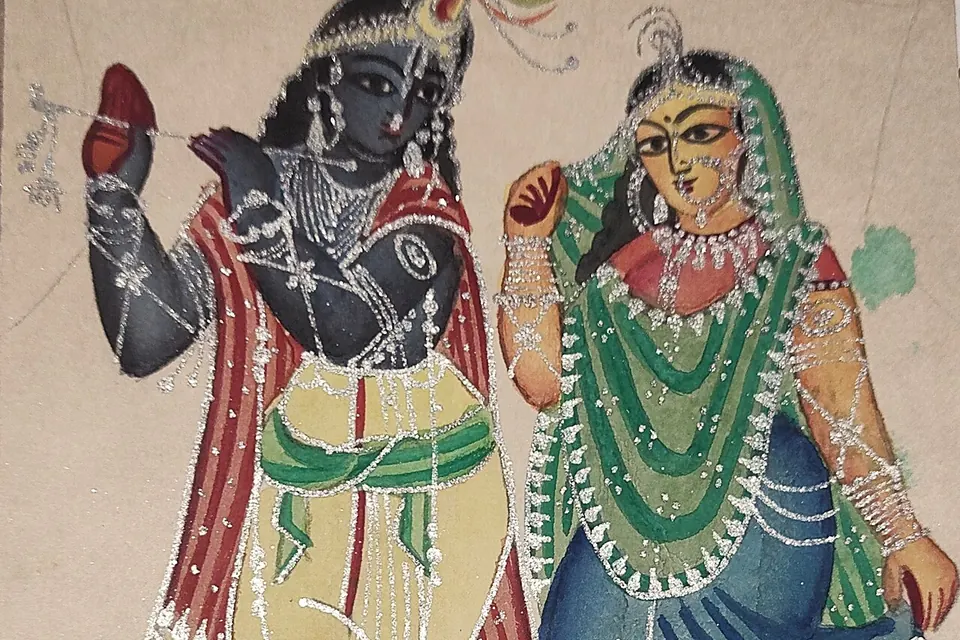
The temple tradition reads the journey as a visit by Jagannath to the house of his aunt or to the place of his own origin. Gaudiya Vaishnavas add a further layer. Following the Chaitanya-charitamrita, they see the procession as Krishna's return from royal Dvaraka to the village life of Vrindavan, with Chaitanya, singing and dancing before the chariot, in the role of Radha calling him home. The biography gives long descriptions of the singing groups Chaitanya organised for the procession, and of his washing of the Gundicha temple with his companions on the eve of the festival.
The English word "juggernaut" comes from Jagannath. It entered the language through colonial-era accounts, often hostile, that described devotees throwing themselves under the wheels. Historians treat these reports with caution: deaths did occur in the press of the crowd, but the image of voluntary sacrifice was much amplified in missionary literature.
Beyond Puri
Chariot festivals for Jagannath have long been held in other towns of Odisha and Bengal, such as Mahesh near Serampore, whose Ratha-yatra dates back several centuries. In the twentieth century the festival travelled abroad. The first such procession in the United States was held in San Francisco in 1967 by followers of A.C. Bhaktivedanta Swami, and similar parades now take place in London, New York and many other cities, usually in summer and on a smaller scale than in Puri.
In Puri itself the festival has become a major public event, broadcast on Indian television and managed by the state government. Accidents in the crowd remain a concern; the 2025 festival, for example, saw a fatal stampede near the Gundicha temple.
Ratha-yatra in the Chaitanya biographies
The Chaitanya-charitamrita devotes two long chapters (Madhya-lila 13–14) to Chaitanya's participation in the festival. It describes seven groups of singers, each with its own leader and drummers, placed around the chariot, and Chaitanya moving among them so quickly that each group thought he was with them alone. It also describes the king, Prataparudra, sweeping the road before the chariot, an act that, according to the biography, softened Chaitanya's reluctance to meet a ruler. These scenes are among the best known in Gaudiya literature and are re-enacted in devotional performances.
Craft and ritual specialists
The festival depends on hereditary groups. Carpenters (maharanas) build the chariots; painters (chitrakaras) decorate them; tailors sew the canopies; servitors of the temple, the daitapatis, who claim descent from the tribal worshippers of the original deity, attend the images during their illness and transport. The temple kitchen prepares the food offered during the journey. Scholars of Odisha have described the festival as a model of how a temple organises an entire town's labour around a ritual calendar.
Seeing the festival
The procession is broadcast live on Indian television, and the state government publishes schedules and crowd advisories. Visitors who wish to attend are advised to arrive early, to follow police instructions on the Grand Road and to avoid the densest parts of the crowd near the chariots. Rooftops along the road are rented out for viewing. In other cities, the festival is usually a parade lasting a few hours, followed by a vegetarian meal and cultural programmes. Our article on Jagannath Puri describes the temple town itself, and our article on Chaitanya places the festival in his life.
Sources and further reading
- Anncharlott Eschmann, Hermann Kulke and Gaya Charan Tripathi (eds.), The Cult of Jagannath and the Regional Tradition of Orissa, Manohar, 1978.
- Encyclopaedia Britannica, "Rath Yatra": britannica.com/topic/Rath-Yatra.
- Krishnadasa Kaviraja, Chaitanya Charitamrita, Madhya-lila chapters 13–14, trans. Edward C. Dimock Jr., Harvard Oriental Series, 1999.
- Wikipedia, "Ratha Yatra (Puri)" (orientation): en.wikipedia.org.