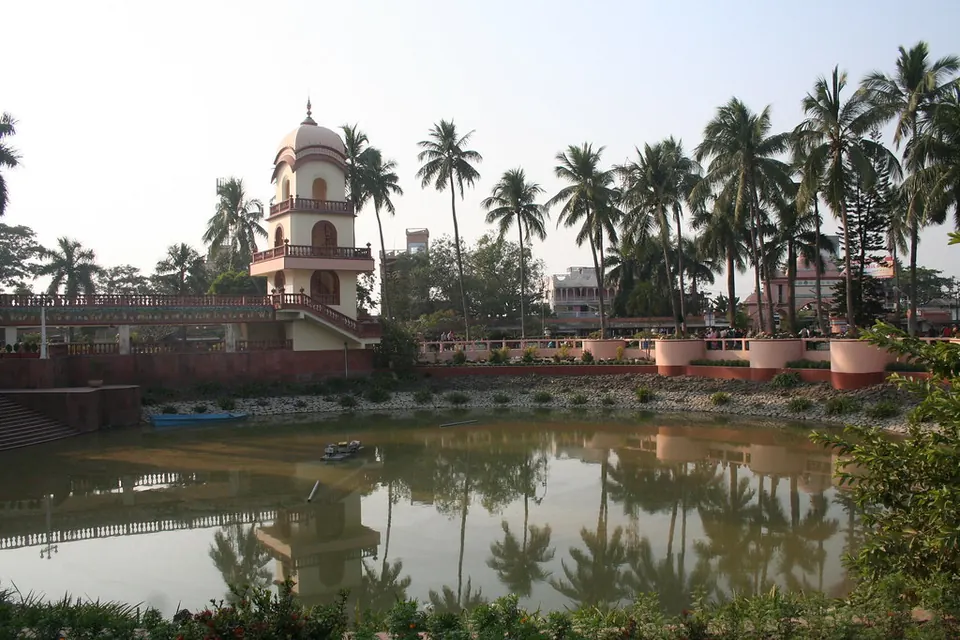
Bhaktisiddhanta Sarasvati and the Gaudiya Math
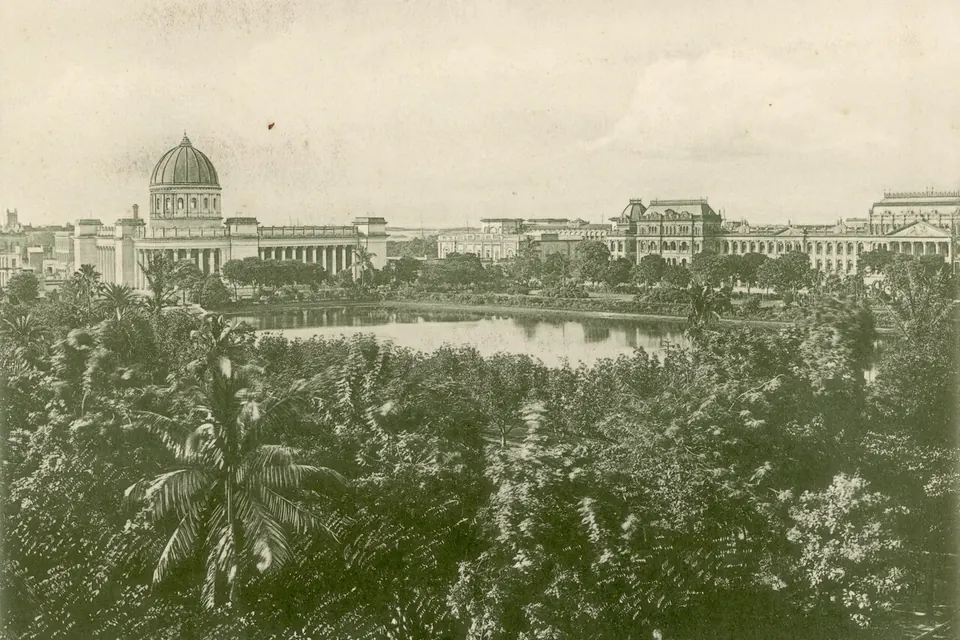
Bhaktisiddhanta Sarasvati turned his father's literary revival into an institution. The Gaudiya Math he founded in Calcutta in 1920 trained renunciant preachers, ran presses and newspapers and opened centres across India, Burma and Europe. Nearly every modern Gaudiya mission traces its lineage to him.
Early life and learning
He was born Bimala Prasad Datta on 6 February 1874 in Puri, where his father, Bhaktivinoda Thakura, was then posted. He studied in Calcutta and became known for his knowledge of mathematics and astronomy, publishing traditional astronomical almanacs; the title "Siddhanta Sarasvati" refers to this learning. In 1900 he received initiation from Gaurakishora Dasa Babaji, an ascetic of Navadvipa known for his austerity.
He spent years in study and solitary practice before stepping into public life. In 1918 he took the vows of a sannyasi himself, an unusual step at the time, since Bengali Vaishnavism had largely abandoned formal renunciation in favour of householder lineages.
A mission on a new model
The Gaudiya Math, formally established in 1920, combined traditional devotion with modern organisation. Its main features were:
- A celibate order of preachers in saffron, each bearing the title of a tridandi sannyasi.
- Printing presses and periodicals, including a daily newspaper, the Nadiya Prakash, and the revived journal Sajjana-toshani.
- Large exhibitions, theatrical presentations and public lectures in Bengali, Hindi and English.
- Some sixty-four centres by the 1930s, with a grand temple in the Bagbazar district of Calcutta opened in 1930.
- Missions abroad from 1933, when preachers were sent to London and later to Germany.
Controversy
Bhaktisiddhanta's reforms provoked strong opposition. He argued that spiritual qualification, not birth, made a Brahmin, and gave the sacred thread to initiated men of all castes. He criticised hereditary Gosvami families who claimed authority by descent, and fringe groups he considered to have distorted Chaitanya's teaching. Historians such as Ferdinando Sardella have shown how these positions placed him among the modernising reformers of colonial Bengal, even as he rejected much of their secular outlook.
Death and succession
He died in Calcutta on 1 January 1937. He had appointed a governing body to run the mission but left no undisputed single successor. Within months disagreements over leadership and property opened a long crisis described in our article on the breakup of the Gaudiya Math. His disciples went on to found many independent institutions, including Sri Chaitanya Saraswat Math, the Gaudiya Vedanta Samiti and the International Society for Krishna Consciousness.
Teacher and teaching
Bhaktisiddhanta's theology closely followed that of his father and of the Gosvamis of Vrindavan, but he gave it a sharper edge. He insisted that the guru must be a qualified teacher rather than a hereditary priest, that devotion is a matter of spiritual practice rather than emotional display, and that preaching, rather than solitary devotion, is the highest service in the present age. His formula "the hearing and preaching of the holy name" summed up an activist piety unusual in the Bengali Vaishnavism of the time.
He was also a polemicist. His lectures and articles attacked not only hereditary Gosvamis but also groups he called sahajiya, who in his view treated the love of Radha and Krishna as a model for physical relationships, and advocates of Advaita Vedanta, whom he considered the main intellectual opponents of devotion. Historians note that these debates were also contests for authority over the image of Chaitanya in modern Bengal.
Print and propaganda
Bhaktisiddhanta believed that the printing press was a modern form of kirtan, a way of spreading the holy name. The Gaudiya Math published editions of the classics of the tradition, including the Chaitanya-charitamrita and the Chaitanya-bhagavata with his commentaries, as well as Bengali periodicals and English pamphlets. He organised large exhibitions with dioramas of Chaitanya's life, a medium that his disciples later used in India and abroad. Sardella describes this combination of traditional content and modern media as central to his project.
Mayapur and the pilgrimage sites
Following his father, Bhaktisiddhanta developed Mayapur as the birthplace of Chaitanya. He built the Chaitanya Math there in 1918 and promoted the Navadvipa parikrama on a large scale. He also marked sites associated with Chaitanya across India by installing footprints in stone (pada-pitha) at places the biographies say Chaitanya visited. These activities gave the Gaudiya Math a visible presence at pilgrimage centres and linked the mission to a sacred geography that its successors still maintain.
Disciples abroad
The first Gaudiya preachers in Europe were sent in 1933. Bhakti Hridaya Bon gave lectures in London and later in Germany, and a small centre was opened in London. The mission did not take root at that time, but it prepared later efforts: several of Bhaktisiddhanta's disciples, including A.C. Bhaktivedanta Swami, later recalled his wish to see Chaitanya's teachings preached in English in the West.
A personal style
Accounts by contemporaries describe Bhaktisiddhanta as austere, intellectually formidable and uncompromising in debate. He followed strict rules of renunciation, lectured for hours and expected his disciples to do the same. Admirers saw in him a lion-like guardian of doctrine; critics found him harsh. Both portraits appear in the literature about him, and historians such as Sardella have tried to place them in the context of a reformer working against strong opposition in a society under colonial rule.
Further reading on this site
His father's life is told in our article on Bhaktivinoda Thakura, and the anthology compiled in his mission is discussed in our article on the Vaishnava-tattva chapter of the Gaudiya Kanthahara.
Sources and further reading
- Ferdinando Sardella, Modern Hindu Personalism: The History, Life, and Thought of Bhaktisiddhanta Sarasvati, Oxford University Press, 2013.
- Ferdinando Sardella and Lucian Wong (eds.), The Legacy of Vaisnavism in Colonial Bengal, Routledge, 2019.
- Encyclopaedia Britannica, "Gaudiya Math" and "Vaishnavism": britannica.com/topic/Vaishnavism.
- Wikipedia, "Bhaktisiddhanta Sarasvati" (orientation): en.wikipedia.org.