Bhaktivinoda Thakura: magistrate, writer and reformer
Bhaktivinoda Thakura, born Kedarnath Datta, is widely regarded as the man who revived Gaudiya Vaishnavism among educated Bengalis in the late nineteenth century. A page at this address once indexed his writings; this article is a new, sourced profile.
A Bengali civil servant
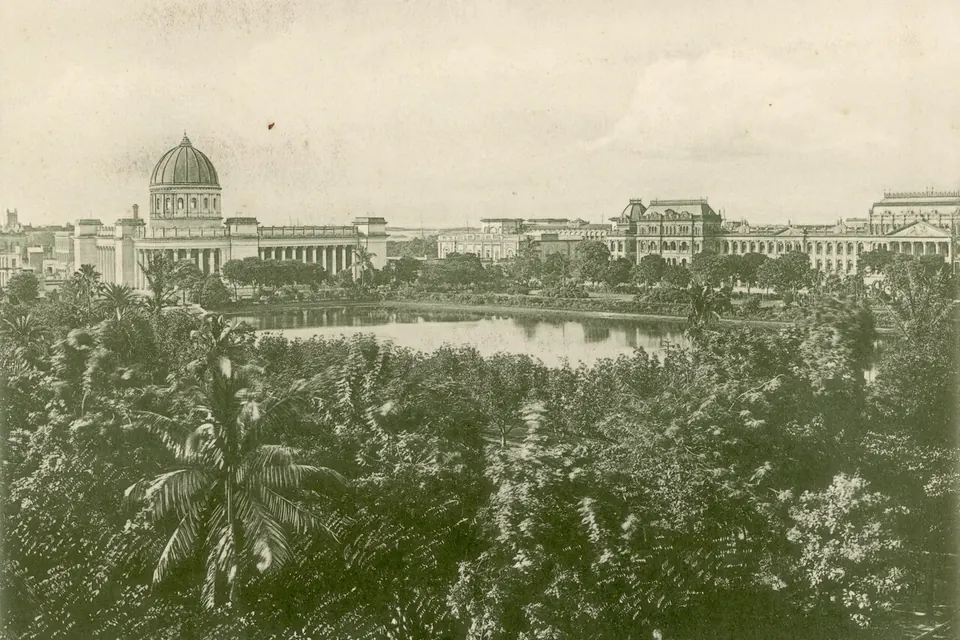
Kedarnath Datta was born on 2 September 1838 in Ula (Birnagar), in the Nadia district of Bengal, into a family of the Kayastha caste. He received an English education in Calcutta, frequented the circles of the Bengal Renaissance and, after a period as a teacher, joined the provincial administration in 1866. He served for nearly thirty years as a deputy magistrate in several districts of Bengal and Orissa, including Puri, where he was for a time involved in the management of the Jagannath temple.
By his own account he came to Vaishnavism through reading, around 1868, the Chaitanya-charitamrita and the Bhagavata Purana. At that time Bengali Vaishnavism was often dismissed by the urban elite as the religion of the uneducated, associated with fringe groups whose practices reformers found embarrassing. Kedarnath set out to present it as a rational, ethical and universal religion.
An enormous output
He published around a hundred works in Sanskrit, Bengali and English. Among the best known:
- Krishna-samhita (1880), an early attempt to read the Krishna story with the tools of historical criticism while keeping its spiritual meaning.
- Chaitanya-shikshamrita (1886), a systematic account of Chaitanya's teachings.
- Jaiva Dharma (1896), a theological novel in which characters debate doctrine.
- Song collections such as Kalyana-kalpataru (1881), Sharanagati and Gitavali (both 1893), whose Bengali songs are still among the most sung in Gaudiya temples.
- The monthly journal Sajjana-toshani, which he edited for many years.
In 1896 he sent a short English book, Sri Chaitanya Mahaprabhu: His Life and Precepts, to libraries and universities abroad, including McGill University in Canada, one of the first attempts to present the tradition to Western readers.
Navadvipa and Mayapur
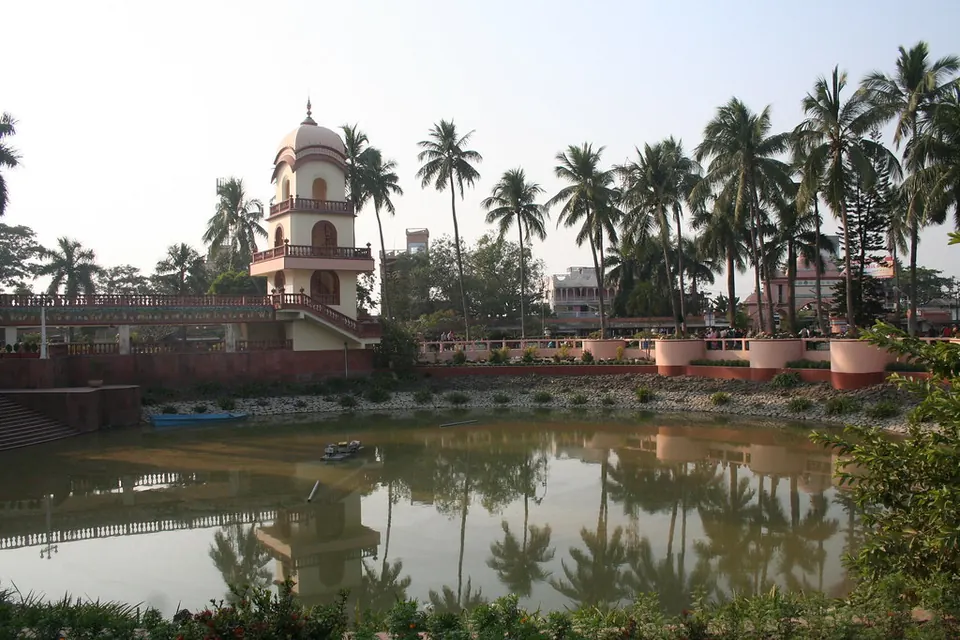
After retirement in 1894 he settled near Navadvipa, Chaitanya's home town. He argued, on the basis of old maps and local testimony, that Chaitanya's actual birthplace lay at a village called Mayapur on the eastern bank of the Ganges, rather than in the modern town of Navadvipa. A temple was built there in the 1890s. The identification was contested by some local Vaishnavas at the time and remains disputed by some, but Mayapur has since become a major pilgrimage centre. He also promoted the parikrama, the pilgrim circuit of the nine "islands" of Navadvipa.
Legacy
Bhaktivinoda took formal vows of renunciation late in life and died in Calcutta on 23 June 1914. His son, Bimala Prasad, became Bhaktisiddhanta Sarasvati, founder of the Gaudiya Math, through whom nearly all modern Gaudiya missions trace their lineage. Historians see Bhaktivinoda as a characteristic figure of colonial modernity: a government official who used print, journals and public debate to rebuild a religious tradition.
Reformer of practice
Bhaktivinoda's reforms went beyond writing. He criticised practices he considered degenerate, including groups that combined Vaishnava devotion with sexual rituals and itinerant performers who used devotional songs for money. He promoted the chanting of the holy name as a simple, universal practice, organised preaching tours and founded a society, the Vishva Vaishnava Sabha, to bring educated Vaishnavas together. His position as a government official gave him access to the colonial administration and the press, which he used to defend Vaishnavism against critics.
The songs
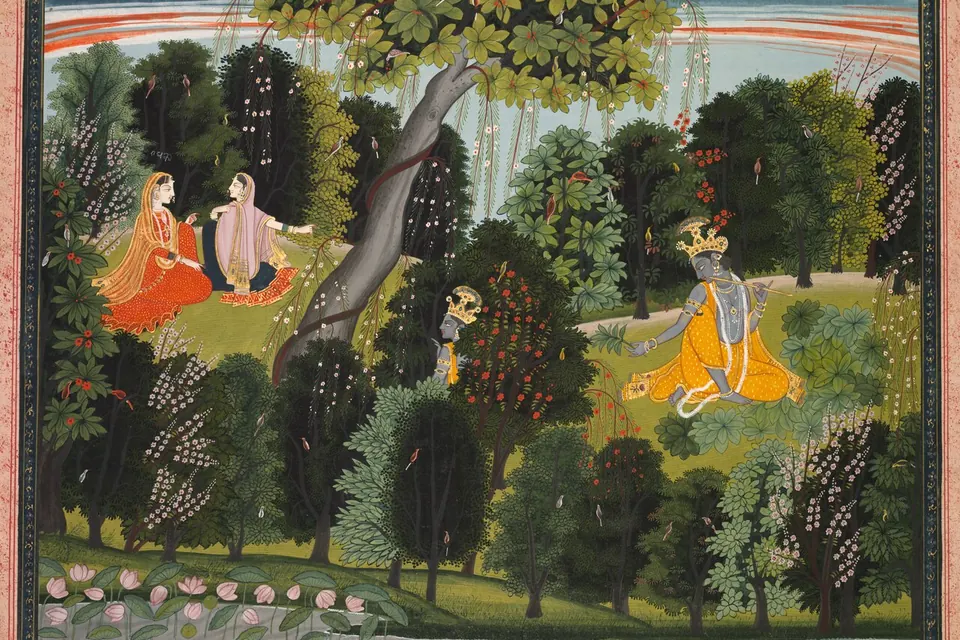
For most devotees today, Bhaktivinoda is above all a songwriter. His songs are short, rhymed and composed in plain Bengali, a deliberate choice to reach people who could not read Sanskrit. Sharanagati is organised around the six aspects of surrender, Kalyana-kalpataru around the stages of devotional life, and Gitavali around festivals and the names of Krishna and Radha. Several of the songs discussed in our article on Vishnujana Swami's repertoire, such as Manasa deha geha and Gopinatha, come from these collections.
A modern hermeneutics
Historians have given particular attention to Bhaktivinoda's way of reading scripture. In the Krishna-samhita he distinguished between readers who understand the text literally and readers able to grasp its essence, and he accepted some conclusions of historical criticism, such as the late dating of the Puranas, while maintaining their spiritual authority. Scholars such as Shukavak Dasa see this as an original attempt to reconcile tradition and modern scholarship, akin to efforts in other religious traditions of the nineteenth century. In later life his writings became more conservative in tone, a shift historians have also discussed.
Family and succession
Bhaktivinoda had a large family. His son Bimala Prasad, born in Puri in 1874, became Bhaktisiddhanta Sarasvati, and another son, Lalita Prasad, led a separate lineage of householder disciples. The two lines took different views of initiation and practice, an early sign of the plurality of institutions that would later trace their origins to Bhaktivinoda. His home at Godrumadvipa, near Navadvipa, remains a pilgrimage site.
Reading Bhaktivinoda today
Many of Bhaktivinoda's works have been translated into English, Hindi and other languages by the institutions descended from him, and his songs are printed in nearly every Gaudiya songbook. Academic interest has grown since the 1990s, with studies of his journalism, his hermeneutics and his place in the Bengal Renaissance. Readers can follow the next generation in our article on Bhaktisiddhanta Sarasvati and the earlier history in our article on Chaitanya.
Key dates
1838: born at Ula, Nadia. 1866: enters the provincial administration. 1880: Krishna-samhita. 1881: Kalyana-kalpataru. 1893: Sharanagati and Gitavali. 1894: retires. 1896: Jaiva Dharma and the English booklet on Chaitanya. 1914: dies in Calcutta.
Sources and further reading
- Shukavak N. Dasa, Hindu Encounter with Modernity: Kedarnath Datta Bhaktivinoda, Vaisnava Theologian, Sanskrit Religions Institute, 1999.
- Jason D. Fuller, "Re-Membering the Tradition: Bhaktivinoda Thakura's Sajjanatosani and the Construction of a Middle-Class Vaisnava Sampradaya in Nineteenth-Century Bengal", in Antony Copley (ed.), Hinduism in Public and Private, Oxford University Press, 2003.
- Ferdinando Sardella, Modern Hindu Personalism, Oxford University Press, 2013, chapter 2.
- Wikipedia, "Bhaktivinoda Thakur" (orientation): en.wikipedia.org.